


Isiolo Residents Demand Government Action on Rising Human–Wildlife Conflicts

Residents of Ngaremara and Burat wards in Isiolo are calling on the government to take stronger measures to address the growing human–wildlife conflicts that continue to claim lives, destroy property, degrade the environment, and threaten wildlife populations.
The concerns were raised during a community dialogue forum in Isiolo organized by local radio stations Angaf and Radio Shahidi in partnership, with the Kenya Community Media Network (KCOMNET). During the forum frustrated residents shared personal experiences of repeated clashes with wildlife and the devastating toll on their livelihoods.
The forum which also brought together experts in wildlife conflict, land management, and water resource governance, helped the participant engage with each other as well as try to identify the root causes and solutions to conflicts over natural resources.
Ann Mugure, one of the residents, recalled how elephants invaded her farm four years ago, destroying crops of great value. Together with other affected neighbors, they reported the incident to the Kenya Wildlife Service (KWS) office in Mali Saba and damage assessment reports from the local agriculture office.

Despite adhering to the due process Mugure lamented that three years later, no compensation had been received by her or other affected residents I her village.
Her frustrations were echoed by Zachary Zileta, a community leader from Ngaremara, who noted that many residents have similar unresolved cases, including incidents where human lives were lost as a result of wildlife attacks.
Zileta questioned why KWS had not been utilizing allocated funds to compensate victims, citing numerous examples of pending claims that he presented for the audience during the panel sitting.
According to government records, KWS disbursed KSh. 960 million for compensation in 2024, with an additional KSh 1.95 billion allocated in 2025. The Wildlife Conservation Act further requires each county to establish wildlife compensation committees to help victims report cases, assess damages, and process claims.
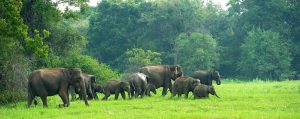
Joyce Nailesiae, a resident of Burat, highlighted that many settlements in Burat and Ngaremara are located near national parks or directly along elephant corridors, increasing the likelihood of conflict human and wildlife conflicts. She said that human activities such as grazing and charcoal burning within protected areas have disrupted wildlife movement, further escalating incidences of such clashes.
“Every year, elephant herds cross these areas during migration, causing destruction and panic. Permanent solutions are needed in these high-conflict zones to prevent future incidents,” Joyce stressed.
Encroachment into water catchment areas has also worsened the situation. Michael Kamau, Chairperson of Burat Water Resource Users Association (WRUA), accused residents of degrading water sources through grazing and other activities, leading to the drying up of springs. He warned that this would push wildlife into settlements in search of water, triggering more conflict.
Meanwhile, Mary Nairuti criticized the government’s selective compensation process, pointing out that KWS does not compensate victims of snake bites despite such cases often resulting in deaths.
She suggested that the government should review the compensation law to include snake bites which she said have claimed many people’s lives that she has knowledge of from her locality in Leparua.
The residents urged the government to strengthen awareness on compensation procedures, speed up payments, and adopt long-term strategies to manage human–wildlife conflicts in Isiolo and its environs.